
Let’s talk about something most men Google at 2 AM when nobody is watching.
You’re losing hair. You’ve noticed it in the mirror, in the shower drain, in your colleagues’ eyes during that important presentation. You’ve spent hours researching solutions and landed on three main options: hair wigs, hair transplants, and PRP therapy. Each promises to solve your problem. Each comes with wildly different price tags, recovery times, and results.
But nobody gives you the honest, straight-talking comparison you actually need. Most content is either written by hair transplant clinics pushing their services or wig sellers promoting their products.
This guide is different. I’m breaking down everything with real Indian pricing, honest pain assessments, and practical advice for men across different income brackets. By the end, you’ll know exactly which option suits your situation, your lifestyle, and your wallet.
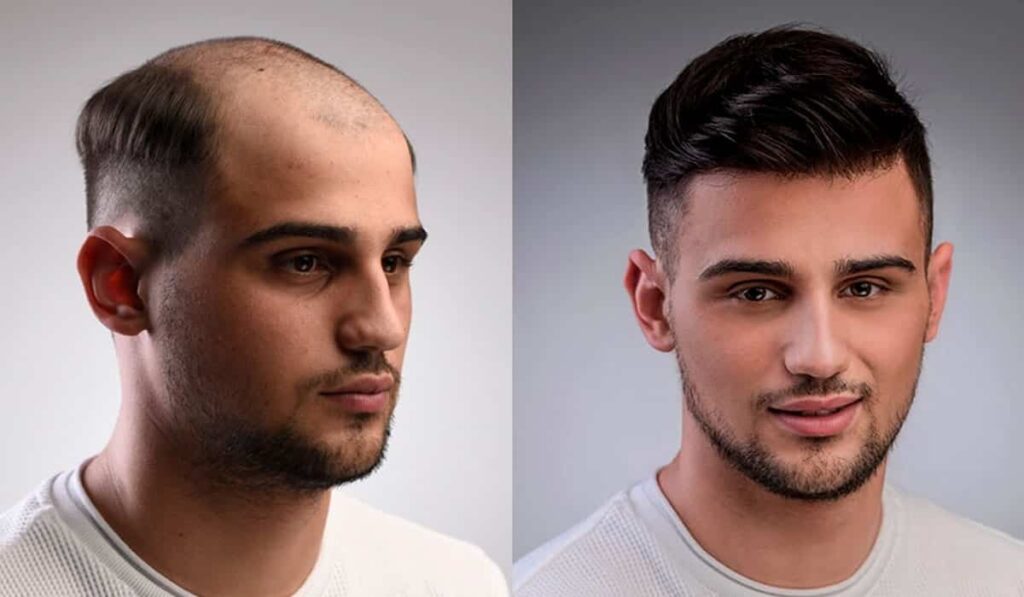
Understanding the Three Options First
Before comparing costs, let’s make sure we’re comparing apples to apples.
Hair Wigs and Hair Systems are external hairpieces made from human or synthetic hair that attach to your scalp using adhesives, tapes, clips, or integration techniques. Modern hair systems are so advanced that trained professionals often cannot distinguish them from natural hair at normal conversational distance.
Hair Transplant is a surgical procedure where hair follicles are extracted from a donor area (typically the back of your head) and implanted into balding areas. The two main techniques are FUT (Follicular Unit Transplantation, involving a strip of scalp removal) and FUE (Follicular Unit Extraction, where individual follicles are extracted). Results are permanent but require months to become visible.
PRP (Platelet-Rich Plasma) Therapy is a non-surgical procedure where your own blood is drawn, processed to concentrate growth factors, and injected into your scalp. It stimulates dormant hair follicles and strengthens existing hair. PRP does not create new hair where follicles are completely dead but can significantly improve thinning hair situations.
These are fundamentally different solutions with different ideal candidates. Understanding this prevents expensive mistakes.
Who is the Ideal Candidate for Each Option?
This is where most comparisons fail you by not being specific enough.
Hair Wigs Work Best For: Men with extensive hair loss (Norwood Scale 5-7), those who want immediate results without waiting months, men who cannot undergo surgery due to health conditions, individuals with insufficient donor hair for transplants, anyone seeking a reversible, flexible solution, and men who want to change their look periodically.
Hair Transplant Works Best For: Men with stable, predictable hair loss patterns (Norwood Scale 2-5), those with adequate donor hair density, individuals comfortable with surgical procedures and recovery, men seeking permanent solutions willing to wait 12-18 months for full results, and those without medical contraindications to surgery.
PRP Works Best For: Men in early hair loss stages (Norwood Scale 1-3), those experiencing thinning rather than complete baldness, individuals seeking to slow hair loss progression, men wanting to complement other treatments, and anyone maintaining post-transplant results.
Understanding where you fall on this spectrum immediately narrows your options and saves you from spending money on solutions that won’t work for your specific situation.
Comprehensive Cost Breakdown for Indian Men
Now let’s get to what you actually came here for: the real numbers.
Hair Wig Cost in India 2026
Initial Purchase Cost:
Entry-level synthetic wigs range from ₹5,000 to ₹15,000. These work for occasional use but look noticeably artificial upon close inspection. Lifespan is approximately 6-12 months.
Mid-range human hair toupees and partial systems cost ₹15,000 to ₹50,000. These look significantly more natural and are suitable for daily wear. Lifespan ranges from 12-24 months with proper care.
Premium Remy human hair full systems run ₹50,000 to ₹1,20,000. These are virtually undetectable, customized to your exact specifications, and can withstand active lifestyles including swimming and gym workouts. Lifespan extends to 2-4 years.
Luxury custom hair systems from international suppliers cost ₹1,20,000 to ₹3,00,000. These represent the absolute pinnacle of hair replacement technology with European or Brazilian virgin hair, ultra-thin bases, and lifetime support packages.
Ongoing Monthly Costs:
Professional reattachment sessions cost ₹1,500 to ₹5,000 every 3-6 weeks depending on your chosen adhesive method. Specialized maintenance products including wig shampoo, conditioner, adhesive remover, and styling products add ₹2,000 to ₹4,000 every 2-3 months. Occasional professional styling runs ₹500 to ₹2,000 per session.
Five-Year Total Cost Calculation for Hair Wigs:
For a mid-range human hair system (₹30,000 initial), replacing every 18 months means 3-4 purchases over 5 years totaling ₹90,000 to ₹1,20,000. Add maintenance costs of approximately ₹30,000 to ₹50,000 annually, bringing your 5-year total to ₹2,40,000 to ₹3,70,000.
For a premium system (₹80,000 initial) lasting 3 years, you’ll make 1-2 purchases over 5 years totaling ₹80,000 to ₹1,60,000. Maintenance costs remain similar at ₹30,000 to ₹50,000 annually, bringing your 5-year total to ₹2,30,000 to ₹4,10,000.
Hair Transplant Cost in India 2026
Hair transplant pricing in India depends primarily on the number of grafts required and the technique chosen.
FUT (Strip Method) Pricing:
FUT costs ₹25 to ₹45 per graft in India. A typical session requiring 2,000 grafts costs ₹50,000 to ₹90,000. For extensive baldness requiring 4,000 grafts, total costs reach ₹1,00,000 to ₹1,80,000.
FUE (Individual Extraction) Pricing:
FUE costs ₹40 to ₹120 per graft depending on clinic quality and city. A 2,000-graft session runs ₹80,000 to ₹2,40,000. Extensive procedures requiring 4,000+ grafts cost ₹1,60,000 to ₹4,80,000.
City-Wise Price Variation:
Tier 1 cities like Mumbai and Delhi command the highest prices, with FUE procedures running 20-40% higher than national averages. Bangalore and Hyderabad fall in the mid-range. Cities like Pune, Chennai, and Ahmedabad offer comparable quality at 10-20% lower costs. Smaller cities can offer significantly reduced pricing but with variable quality control.
Additional Costs Beyond the Procedure:
Pre-surgery blood tests and scalp analysis add ₹3,000 to ₹8,000. Post-surgery medications including antibiotics, anti-inflammatories, and specialized shampoos cost ₹5,000 to ₹15,000 for the first 3 months. Follow-up consultations over 12-18 months add ₹10,000 to ₹25,000. Many men require a second session 2-3 years after the first as hair loss continues in non-transplanted areas, effectively doubling their total investment.
Five-Year Total Cost Calculation for Hair Transplants:
For a mid-range FUE procedure (₹1,50,000 for 2,500 grafts) in Bangalore, add pre/post-operative costs of ₹25,000, bringing the first procedure to ₹1,75,000. Many men invest in a second touch-up session within 5 years for another ₹80,000 to ₹1,50,000. Add Minoxidil or Finasteride medications often recommended alongside transplants at ₹500 to ₹2,000 monthly. Your 5-year total realistically reaches ₹3,00,000 to ₹5,00,000 for comprehensive results.
PRP Therapy Cost in India 2026
PRP is the most affordable option individually but requires repeated sessions for sustained results.
Per-Session Pricing:
Basic PRP sessions at reputable clinics cost ₹3,000 to ₹8,000 per session in smaller cities. Premium PRP with advanced centrifuge technology costs ₹8,000 to ₹15,000 per session in metro cities. Advanced GFC (Growth Factor Concentrate) therapy, an evolved form of PRP, runs ₹10,000 to ₹20,000 per session.
Treatment Protocol:
An effective PRP protocol requires 6-8 sessions in the first year, typically spaced 4-6 weeks apart. This means initial year costs of ₹24,000 to ₹1,20,000 depending on your chosen clinic and PRP type. Maintenance requires 3-4 sessions annually after the first year.
Five-Year Total Cost Calculation for PRP:
Year 1 (intensive phase): ₹48,000 to ₹1,20,000 for 6-8 sessions. Years 2-5 (maintenance phase): ₹36,000 to ₹80,000 annually for 4 sessions. Your 5-year total for standalone PRP reaches ₹1,92,000 to ₹4,40,000.
However, PRP alone rarely provides visible results for men with significant baldness. Most Indian clinics combine PRP with Minoxidil (₹500 to ₹1,500 monthly) and sometimes Finasteride (₹300 to ₹1,000 monthly), adding ₹48,000 to ₹1,50,000 to your 5-year total.
Realistic 5-year PRP investment including supporting medications: ₹2,40,000 to ₹5,90,000.
Pain Level Honest Assessment
This is something most blogs gloss over because it makes their preferred solution sound unattractive. Here’s the truth.
Hair Wig Pain Level: 0 out of 10
Zero. Absolutely zero pain. The application process involves cleaning your scalp, applying adhesive or tape, and positioning the hairpiece. Some adhesives have mild fumes that may irritate sensitive noses temporarily. That’s it. No needles, no incisions, no recovery period.
Hair Transplant Pain Level: 6 out of 10
Let’s be honest here. The procedure itself is performed under local anesthesia, so the surgery is painless once numb. However, the injections of local anesthesia across your scalp are genuinely uncomfortable, often described as a burning, stinging sensation lasting 15-20 minutes. Post-operative pain is real. The first 3-5 days involve significant scalp tenderness, tightness (especially with FUT), and sleeping discomfort. Swelling of the forehead is common in the first week. Most patients rate post-op discomfort at 5-7 out of 10 for the first few days, settling to 2-3 out of 10 by the end of week two.
FUT carries higher pain levels than FUE due to the linear incision and stitches at the donor site. The scar can cause tightness and discomfort for 2-4 weeks.
PRP Pain Level: 4 out of 10
PRP involves multiple injections across your scalp. Even with topical numbing cream applied beforehand, the injections cause noticeable discomfort. Most patients describe it as a sharp stinging sensation with each injection, and a treatment session involving 20-40 injection points is genuinely unpleasant. The good news is discomfort subsides within hours. There’s minimal next-day pain, perhaps just scalp sensitivity when washing hair.
Recovery Time Comparison
Hair Wig Recovery Time: Immediate
You walk into the shop with hair loss and walk out with a full head of hair the same day. There is no recovery period. You can immediately return to work, attend events, exercise, and live your normal life. The only “adjustment period” is psychological as you adapt to the sensation of wearing the system.
Hair Transplant Recovery Time: 12-18 Months
This is the most significant factor most transplant candidates underestimate. Immediately after surgery, your scalp is covered in small scabs around implanted grafts. You must sleep elevated, avoid touching your scalp, and take time off work (typically 5-7 days minimum for desk jobs, 2-3 weeks for physical work).
The transplanted hair falls out completely within 2-4 weeks of surgery. This “shock loss” phase is emotionally difficult because you look worse than before the procedure. New hair growth begins around months 3-4. Visible improvement appears around months 6-8. Full results take 12-18 months to materialize.
During those waiting months, you’re walking around with the same or worse hair loss appearance while having spent significant money. This reality check is crucial for managing expectations.
PRP Recovery Time: 24-48 Hours
PRP requires minimal recovery. Most people experience scalp redness and mild sensitivity for 24-48 hours. You should avoid hair washing for 24 hours after treatment and intense exercise for 48 hours. Results don’t appear immediately. Initial improvements in hair thickness become noticeable after 3-4 sessions, typically 3-4 months into treatment. Significant results develop over 6-12 months of consistent treatment.
Naturalness Rating Comparison
This is subjective and technology-dependent, but here’s an honest assessment.
Hair Wig Naturalness: 7-9 out of 10
Modern premium hair systems, when properly fitted and maintained, score 8-9 out of 10 for naturalness. At normal social distances of 1-2 meters, even trained professionals struggle to identify quality hair systems. Up close inspection may reveal the hairline edge on lower-quality systems. In wind or during water activities, improper attachment can cause movement that reveals the system.
The naturalness score drops to 6-7 out of 10 for mid-range products and 4-5 out of 10 for budget synthetic options.
Hair Transplant Naturalness: 8-10 out of 10
A well-performed FUE transplant by a skilled surgeon in sufficient density achieves 9-10 out of 10 naturalness because it literally is your own hair growing from your scalp. The hair grows, can be cut, styled, and touched exactly like natural hair with zero risk of detection. However, overharvested donor areas can look thin, and poorly designed hairlines can look artificial. The naturalness ceiling is higher than wigs but so is the floor risk when choosing low-quality surgeons.
PRP Naturalness: Not Applicable in Traditional Sense
PRP doesn’t create a hairpiece to assess for naturalness. It works with your existing hair. If it works well for you, your natural hair simply looks thicker and fuller. If it doesn’t create sufficient improvement, you’re left with the same thinning appearance. The treatment itself is invisible.
Reversibility Comparison
Hair Wig: Completely Reversible
You can remove your hair system any time you want. You can try different styles, colors, and lengths. You can switch from a wig to another solution without any lasting impact on your natural hair or scalp. This flexibility is a significant advantage for men uncertain about committing to permanent solutions.
Hair Transplant: Essentially Permanent
Once done, hair transplants cannot be undone. The follicles are permanently implanted. While the transplanted hair can be shaved like natural hair, the follicles remain in their new location. Additionally, FUT leaves a permanent linear scar at the donor site that requires longer hair to conceal. This permanence is an advantage for those committed to the solution but a significant risk for those not completely certain.
PRP: Completely Reversible
Stopping PRP simply means the treatment benefits gradually diminish over 6-12 months as the growth stimulation fades. There are no permanent changes to your scalp or follicles. The flexibility is complete, though you lose your investment if you discontinue before seeing meaningful results.
Income Bracket Suitability Guide
Let’s talk practically about which option makes financial sense at different income levels.
Monthly Income: ₹25,000 – ₹50,000 (Annual ₹3-6 Lakhs)
Budget Reality: Discretionary spending for appearance is ₹2,000 to ₹5,000 monthly.
Best Option: Mid-range hair wig system at ₹15,000 to ₹30,000 initial investment with ₹2,000 to ₹3,000 monthly maintenance. Avoid hair transplants at this income level as the procedure cost alone represents 3-6 months of salary, and the ongoing medication and follow-up costs add significant burden. PRP sessions at ₹4,000 to ₹8,000 each are feasible but sustainable only if replacing more expensive alternatives.
Monthly Income: ₹50,000 – ₹1,00,000 (Annual ₹6-12 Lakhs)
Budget Reality: This bracket comfortably affords quality solutions without financial strain.
Best Option: Premium hair system at ₹50,000 to ₹80,000 with professional maintenance, or a mid-range FUE hair transplant (2,000-2,500 grafts) combined with PRP maintenance. This income bracket can realistically pursue any option. The decision should be based on preference and hair loss stage rather than budget constraints. Many men at this level choose hair systems for immediate results while saving for a potential transplant.
Monthly Income: ₹1,00,000 – ₹2,00,000 (Annual ₹12-24 Lakhs)
Budget Reality: All options are financially accessible. Quality should drive the decision.
Best Option: Premium or luxury hair systems, high-quality FUE from reputable surgeons, or comprehensive PRP protocols combined with other treatments. At this income level, investing in the highest quality within each category makes sense. Consider premium international hair systems or choosing the best surgeons rather than cost-cutting.
Monthly Income: Above ₹2,00,000 (Annual Above ₹24 Lakhs)
Budget Reality: Cost is essentially not a limiting factor for hair restoration.
Best Option: Custom luxury hair systems from international suppliers combined with regular scalp maintenance, or high-volume FUE procedures at top-tier clinics with PRP maintenance protocols. Many high-income men choose hair systems for their flexibility and immediate impact while maintaining scalp health through regular PRP sessions.
The Option Most Indian Men Don’t Consider: Combination Approach
Here’s something the industry rarely tells you: the most effective strategy for many men combines multiple approaches.
Consider this increasingly popular combination: a premium hair system for immediate, complete coverage while simultaneously undergoing PRP therapy to maintain and potentially improve existing hair. If PRP generates sufficient natural hair improvement over 2-3 years, you may reduce your dependence on the hair system or transition to less coverage over time.
Another effective combination is getting a hair transplant for frontal hairline restoration (requiring fewer grafts and lower cost) while using a partial hair system for the crown area where transplant density might be insufficient. This hybrid approach provides natural-looking frontal hairlines at lower surgical cost.
Frequently Asked Questions Indian Men Ask
Will anyone know I’m wearing a hair wig? With a premium human hair system properly fitted by skilled technicians, detection at normal social distances is extremely unlikely. Family members or intimate partners may notice upon very close inspection or touching. The detection risk decreases significantly with investment level.
Can I swim and exercise with a hair wig? Yes, with proper bonding adhesives specifically designed for active lifestyles. Many Indian men wear their hair systems during IPL cricket matches, gym sessions, and even swimming pools without issues. Discuss your activity level during consultation to ensure appropriate attachment methods.
Is a hair transplant 100% guaranteed? No. Survival rates of transplanted grafts range from 85% to 95% with skilled surgeons. Poorly performed transplants can result in unnatural-looking pluggy appearances, scarring, and low graft survival requiring corrective procedures. Choosing experienced, board-certified surgeons is non-negotiable.
Does PRP really work for hair loss? PRP shows genuine scientific evidence for improving hair density in men with androgenetic alopecia in early stages. However, results vary significantly based on individual biology, treatment protocol, and hair loss severity. It is not effective for completely bald areas where follicles are no longer present.
Can I color my hair wig? Human hair wigs can be colored similarly to natural hair, though they don’t respond identically. Professional coloring by wig specialists is recommended over DIY attempts. Coloring affects lifespan, so quality wigs handle color better than budget options.
The Honest Verdict
After breaking down every factor, here’s the straightforward recommendation most consultants are reluctant to give:
If you have extensive hair loss (Norwood 4-7), need immediate results, value flexibility, and want to avoid surgery, a premium human hair system is your most practical, cost-effective solution. The 5-year cost is comparable to transplants without surgical risk or waiting time.
If you have early-to-moderate hair loss (Norwood 2-4), have adequate donor hair, can wait 12-18 months for results, and want a permanent surgical solution, FUE hair transplant from a reputable surgeon makes sense. Accept the higher 5-year cost as payment for permanence.
If you’re in early hair loss stages showing thinning rather than baldness, prioritize PRP or advanced treatments like GFC to slow progression, buying time before more significant interventions become necessary.
If you’re unsure, start with a hair system. It’s the only option where you can immediately see results, maintain complete flexibility, and reverse course without consequence. You can always pursue transplant surgery later while wearing a wig, but you cannot undo a transplant if you’re unhappy.
Conclusion
Hair loss affects millions of Indian men and the emotional weight it carries is very real and very valid. Whether you earn ₹30,000 a month or ₹3,00,000 a month, you deserve honest information to make the right choice for your specific situation.
The best solution is the one that fits your hair loss stage, financial reality, lifestyle requirements, and personal preferences. There is no universally superior option. There is only the option that’s right for you, right now, at this stage of your hair journey.
Take your time, consult multiple specialists, ask uncomfortable questions, and never let anyone pressure you into a decision that doesn’t feel right. Your hair restoration journey is personal, and the right solution approached with proper information and realistic expectations can genuinely be life-changing.